A 1,500 W space heater has one blunt problem: its built-in “thermostat” is often a dial with no degrees on it, sensing air a few inches from a hot heating element. So the room overshoots, you turn it down, it gets cold, you turn it to High — and the Kill A Watt shows more kWh than the comfort you got. A plug-in thermostat (also sold as a thermostat outlet or temperature controller outlet) sits between the wall and the heater, reads room air where you are, and cuts power at a real setpoint. Measure what the heater uses now, buy a controller rated for the load, make sure your heater restarts after a power cut, and place the sensor well. The real savings come from lowering the central heat while you zone-heat.
Two separate savings, one much bigger
There are two ways a plug-in thermostat touches your bill, and it helps to keep them apart.
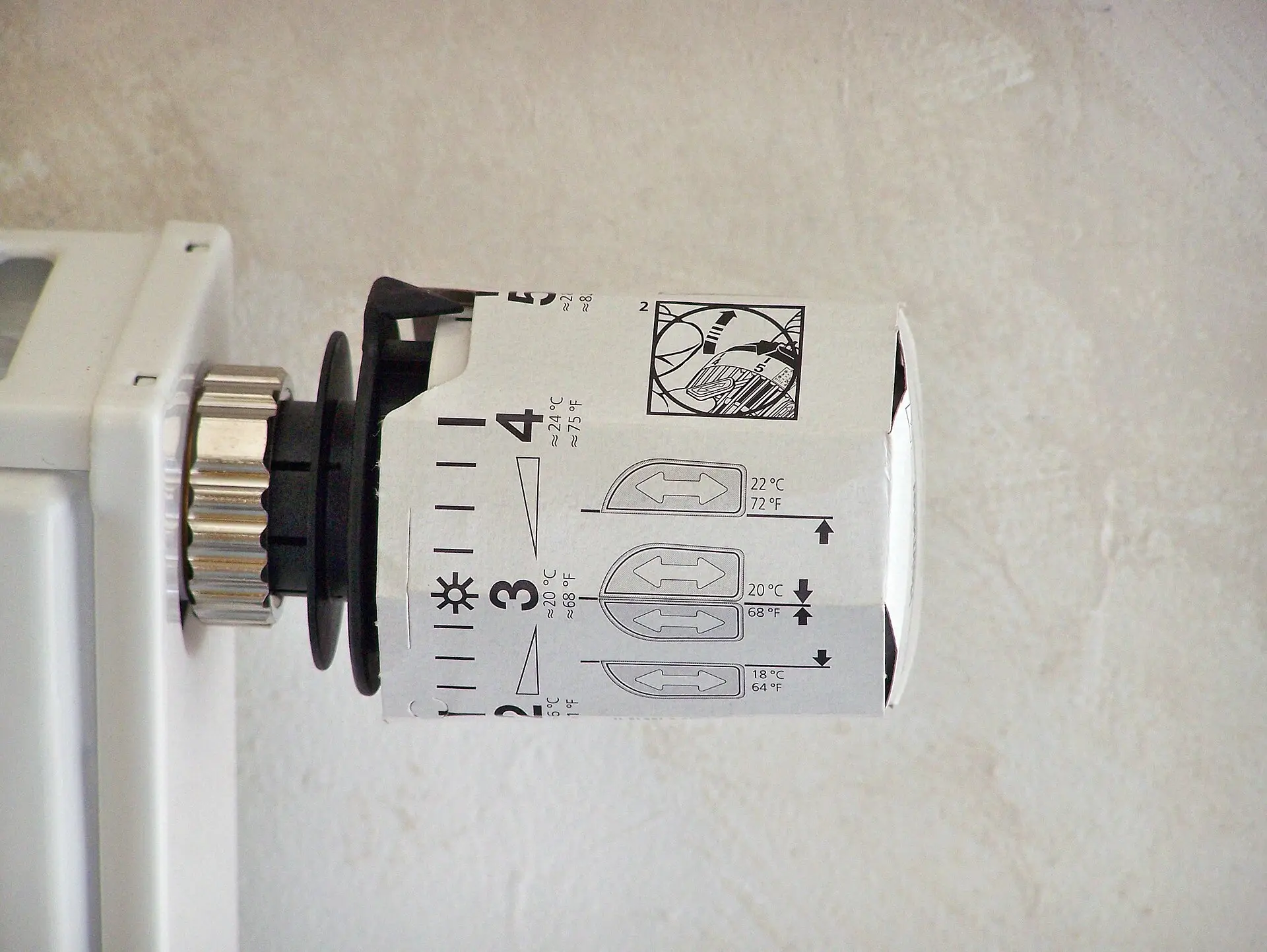
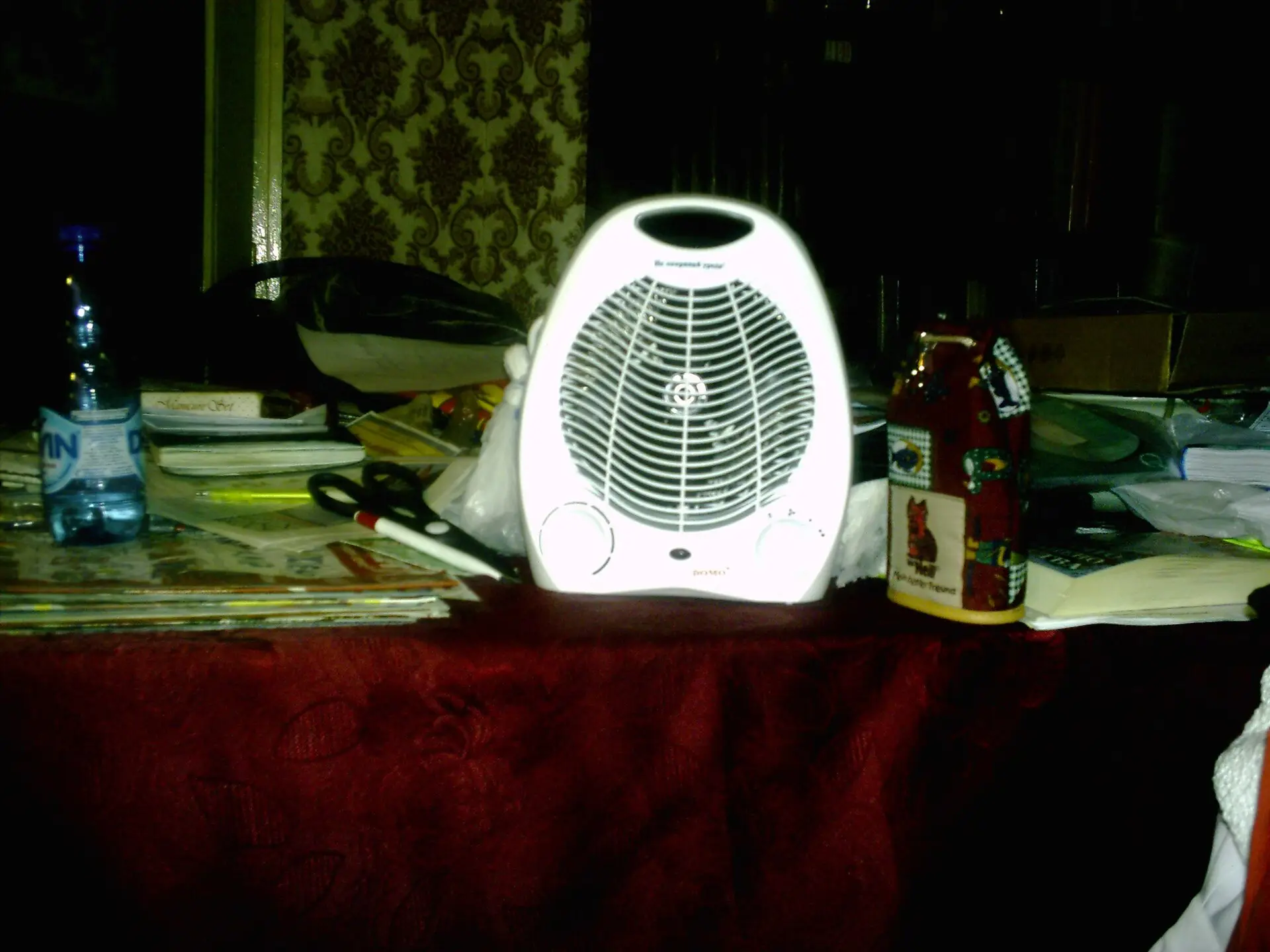
1. Less overshoot from the heater itself (small, real, measurable). Many inexpensive heaters use a simple thermostat inside the cabinet. It sees air warmed by the heater, has a wide on/off swing, and its dial is labeled 1–6 or “low to high” instead of degrees. People compensate by running the heater on High or nudging the dial up. A controller that reads room air at seated height and shuts off at, say, 68°F can cut the hours the heater spends warming the room past what you wanted. How much depends entirely on how badly your heater overshoots — some modern digital heaters already hold temperature reasonably well, and for them the gain may be close to nothing.
2. The central-heat setback the space heater makes possible (bigger, but only if you do it). A space heater is a zone heater. It saves money only when you turn the whole-house thermostat down and heat just the room you’re in. The U.S. Department of Energy says that turning your thermostat back 7–10°F for 8 hours a day can save as much as 10% a year on heating (DOE) — that’s the furnace or heat pump side, not the space heater. Plugged in on top of your old setpoint, a 1,500 W heater with the world’s best controller is still an added load.
Three things decide whether it’s worth doing:
- What heats the rest of the house. Electric resistance, propane, or oil make a whole-house setback worth more. A heat pump in mild weather is already relatively cheap heat; plugging in resistance heat can cost more per unit of warmth than letting the heat pump run.
- How much the heater runs. A heater used an hour a day isn’t worth a controller for bill reasons. One running every evening and overnight in a bedroom or office is.
- Whether the room holds heat. If the heater runs nonstop because of drafts, a thermostat will just agree with you that it’s cold. Seal first: weatherstripping, window kits, outlet gaskets.
Check your home before you buy
Do this before you buy a controller, so you’ll know whether it did anything.
- Read the heater label. Most US portable electric heaters max out around 1,500 W on High (~12.5 A at 120 V). Many have 600–900 W low settings. Write down the watts for the setting you actually use.
- Find your all-in rate. Total electric charges ÷ total kWh on a recent bill (energy plus delivery), not just the energy line.
- Meter a normal night. Plug the heater into a Kill A Watt (directly in the wall, heater directly into the meter) and run it the way you normally do for one evening or night. Read kWh and hours.
- Check the comfort side. Put an indoor thermometer at seated or bed height across the room. Note how high it climbs and how low it drops. A wide swing (for example, 64°F to 74°F) is the overshoot this guide targets.
- Repeat with a controller on a night with similar outdoor temperatures, holding the temperature you actually wanted. Compare kWh per hour of use, not just totals.
- Check the central side. Look at your furnace/heat-pump runtime or the bill for the weeks you held a lower whole-house setpoint. That’s where most of the money is.
Example math only (not a promise): a 1,500 W heater that’s actually heating 70% of an 8-hour evening uses 1.5 kW × 8 h × 0.7 = 8.4 kWh — about $1.43 at $0.17/kWh. If a controller holding a steady 68°F cuts the heater’s on-time to 50% of those hours, that’s 6.0 kWh (~$1.02), roughly $0.41 a night. Those duty-cycle numbers are invented for the arithmetic; your Kill A Watt reading replaces them. If your heater already cycles well, the difference may be near zero.
How plug-in thermostats work (and the types you’ll see)
A plug-in thermostat is a switched outlet with a temperature sensor. In heating mode it turns the outlet on when the sensed temperature falls below your setpoint and off when it rises above it. Most add a few practical features:
- Differential (hysteresis): how far the temperature must drift before it switches. Too tight and it short-cycles; too wide and you feel the swing. Many digital units let you set it; dial units have a fixed swing.
- Calibration offset: lets you match the controller to a separate thermometer.
- Power-loss memory: keeps your settings after an outage (check the listing).
- Heat vs cool mode: the same box often runs fans and air conditioners in cooling mode. Setting a heater on cooling mode is the classic mistake — it runs the heater when the room is warm.
| Type | How it senses | Best for | Watch-outs |
|---|---|---|---|
| Dial plug-in thermostat | Built-in sensor in the plug body | Simplest setup, one room, set-and-forget | Senses air at the outlet (often low, near the floor); coarse dial; fixed swing |
| Digital controller with probe | Sensor on a cord (often ~5 ft) | Putting the sensor at seated height, calibration, precise setpoints | Probe cord must be routed away from the heater; more buttons to learn |
| Wireless remote-sensor thermostat | Sensor inside a handheld/tabletop remote | Bedrooms and offices where you want it “right here” | Remote batteries; keep within range; confirm the outlet’s amp rating |
| Wi-Fi controller | Probe plus app | Checking room temp remotely, alarms, schedules | App quality varies; must still be rated 15 A for heaters |
| Smart plug + separate sensor | Automation via app/hub | People already running a smart-home hub | Depends on Wi-Fi/hub; no temperature control if the link drops; heater manual may prohibit |
| Freeze-protection “thermo cube” | Fixed on/off temps near freezing | Heat tape, well houses, pump enclosures | Not for room comfort — fixed setpoints near freezing |
Which heaters work with a plug-in thermostat?
This is where most returns come from. The thermostat can only cut and restore power. Your heater has to start heating again on its own when power comes back.
- Usually compatible: heaters with mechanical controls — rotary knobs, rocker switches, dial thermostats. Many oil-filled radiators and basic fan/ceramic heaters work this way. Set the heater’s own thermostat to its highest setting (or the setting you want as a ceiling) and let the plug-in controller decide on/off.
- Often not compatible: heaters with digital touch panels or soft-power buttons that wake up in standby after a power cut. They’ll sit dark until someone presses a button. Some digital heaters remember their last mode; many don’t.
- Leave the heater’s safety features alone. Tip-over switches, overheat cutouts, and the heater’s own thermostat still protect the heater. A plug-in thermostat adds control; it never replaces those.
The 30-second restart test (do it before buying a controller): turn the heater on and set it to heat, unplug it from the wall, wait a few seconds, plug it back in. If it resumes heating without a button press, it should work with a plug-in thermostat. If it comes back in standby, it won’t — no controller fixes that.
What to do first
Do these first
- A bedroom or office heater that runs for hours every day with a mechanical dial — the classic overshoot case.
- You’re already doing zone heating with a lower whole-house setpoint, and the heated room swings hot and cold.
- Expensive central heat (electric resistance, propane, oil) where the space heater is how you make a deep setback livable.
- A heater that people leave on High because the dial is unreadable.
These can wait
- Your heater already has a decent digital thermostat that holds within a degree or two — measure first; the gain may be minimal.
- Occasional use — a controller won’t pay back on an hour a day.
- A heat pump in mild weather is heating the house — the cheaper move is usually to let it run, not add resistance heat.
- The room is drafty enough that the heater never satisfies. Seal first; see door draft stoppers and thermal curtains.
- Low-watt personal heat (foot mats, heated throws) — they draw 90–235 W; see under-desk heaters instead.
What not to do
- Do not use a controller rated below the heater’s draw. A 1,500 W heater needs a controller rated 15 A / 1,800 W for heating loads. Controllers rated around 1,000–1,100 W (common reptile/brewing models) are not for space heaters on High.
- Do not put a power strip, extension cord, or “outlet multiplier” anywhere in the chain. Wall outlet → thermostat → heater. ESFI’s guidance: plug space heaters directly into a wall outlet; extension cords and power strips can overheat (ESFI).
- Do not ignore your heater’s manual. If it says to plug only into a wall outlet, follow it — even a well-rated controller adds a connection.
- Do not keep using a setup where the plug, the controller, or the outlet feels hot, discolors, or smells. Loose or worn receptacles heat up under a 12.5 A load; have the outlet checked.
- Do not share the circuit with other big loads (a second heater, a hair dryer, a kettle). A 1,500 W heater uses most of a 15 A circuit by itself.
- Do not treat automation as permission to leave a heater unattended. ESFI advises never leaving a space heater unattended and keeping it at least three feet from anything that can burn. Follow your heater’s manual on sleep and away use.
- Do not run the probe cord across or touching the heater, or tape the sensor to the heater.
- Do not leave the controller in cooling mode with a heater attached.
- Do not use plug-in controllers on hardwired 240 V baseboard heat — that’s a line-voltage thermostat job.
- Do not use one in bathrooms or wet areas unless the controller and heater are both rated for that location.
Sensor placement (where most “it doesn’t work” problems start)
The controller only knows the temperature at its sensor. Put it where you want the temperature to be right.
- Height: seated height for an office or living room; near bed height (on a nightstand) for a bedroom. Floor-level outlets read colder than your head.
- Distance: across the room or several feet away from the heater — not in its warm airflow or line of radiant heat.
- Avoid false cold: exterior walls, windowsills, doors that open to unheated space, and floor drafts make the heater run long.
- Avoid false warm: sunlight, lamps, electronics, and the top of a TV make it shut off early.
- Route the probe along the wall or furniture, not across a walkway, and not under a rug.
- Calibrate once: place an indoor thermometer next to the sensor for an hour and set the offset to match.
Dial-type thermostats with the sensor built into the plug body sense air right at the outlet. If your outlet is low behind furniture or near the heater, a probe or remote-sensor model will usually behave better.
Which one should you buy?
- Will you lower the central heat while you use the space heater?
- No → the controller can trim overshoot, but expect small or no bill change. Consider skipping.
- Yes → continue, and put the setback on a thermostat schedule.
- Did your heater pass the restart test?
- No → no plug-in thermostat will help. Use the heater’s own controls, or replace it with a mechanical-control model.
- Yes → continue.
- What does the heater draw? Read the label. 1,500 W (or anything above ~1,000 W) → only 15 A / 1,800 W heating-rated controllers.
- Where do you want the temperature right?
- Near the outlet is fine, simplest possible → dial plug-in thermostat.
- At your desk or bed, a few feet from the outlet → probe controller or wireless remote-sensor model.
- Do you want to check or change it from your phone? Yes → Wi-Fi controller (still 15 A rated). No → skip the app.
- Still unsure? Start with a Kill A Watt and an indoor thermometer for one week. If the room swings 5°F or more and the heater runs on High, a controller is worth trying.
Sizes and specs
| Item | What to check | Why it matters |
|---|---|---|
| Amp / watt rating | 15 A / 1,800 W (or higher) for heating; read the label and manual, not just the title | A 1,500 W heater pulls ~12.5 A |
| Safety listing | ETL/UL or similar on the product or listing | Basic third-party testing |
| Heating mode | Explicit heat mode (many units do heat and cool) | Wrong mode = heater runs when warm |
| Sensor type | Built-in vs probe vs remote | Decides where you can measure |
| Probe/remote reach | Cord length or wireless range | Gets the sensor to seated height |
| Differential | Adjustable or fixed | Comfort swing vs short-cycling |
| Calibration | Offset setting | Matches your thermometer |
| Power-loss memory | Keeps settings after outage | Avoids surprise behavior |
| Plug style | Pass-through body vs short cord | Fit at the outlet; doesn’t block the second receptacle |
Our picks
We earn a commission if you buy through these Amazon links, at no extra cost to you. Check size and fit on the listing before you order.
Simplest dial pickEconoHome adjustable plug-in thermostat (15 A / 1,875 W)
A no-app, non-digital dial with heat/cool switch, a current-temperature readout, a 41–86°F range, and a listed 15 A / 1,875 W max load with ETL listing — the straightforward choice for a mechanical-knob heater when the outlet is in a reasonable spot. Its sensor is in the plug body, so it reads air at the outlet.
- EconoHome Adjustable Plug-In Heating & Cooling Thermostat Check price on Amazon
Best digital probe controllerDEWENWILS 15 A thermostat outlet
Rated 15 A / up to 1,800 W for heating, with a probe you can route to seated height, temperature calibration, power-loss memory, and timer modes. Good for getting the sensor away from a low outlet and holding a real number.
- DEWENWILS Temperature Controller Outlet, 15 A Thermostat Outlet Check price on Amazon
Best for “measure where I sit”DIGITEN wireless remote-sensor thermostat outlet (15 A / 1,800 W)
The temperature sensor lives in the remote, so you set it on a nightstand or desk and the outlet follows that reading — the cleanest fix for bad sensor placement. Listed at 15 A / 1,800 W max with separate input/output sockets. Keep the remote in range and replace batteries before winter.
- DIGITEN Wireless Thermostat Outlet 1800 W (sensor in remote) Check price on Amazon
Best Wi-Fi pickINKBIRD Wi-Fi plug-in thermostat (15 A / 1,800 W)
App monitoring and adjustment, high/low temperature alarms, calibration, and power-off memory, at a listed 1,800 W / 15 A — useful if you want to check the room from another room or get an alert when it drops. Smaller review base than the others, so check the return window. Note: this is not the older ITC-308 (see below).
- INKBIRD Plug-in Thermostat Wi-Fi, 1800 W 15 A Check price on Amazon
Alternative Wi-Fi option: DEWENWILS Smart Temperature Controller (15 A, app schedules, adjustable differential, outage memory) Check price on Amazon
Must-have helperP3 Kill A Watt P4400
Turns “it feels like it runs less” into kWh per night before and after — the only way to know whether the controller earned its keep.
- P3 P4400 Kill A Watt Electricity Usage Monitor Check price on Amazon
Calibration helperTP49 digital indoor thermometer (2-pack)
A cheap, widely used indoor thermometer/hygrometer (listed ±1°F accuracy) to place next to the controller’s sensor for calibration — and a second one for the far side of the room so you can see the real swing.
- TP49 Digital Hygrometer Indoor Thermometer, 2-pack Check price on Amazon
If your heater fails the restart testmechanical-control oil-filled heaters
Oil-filled radiators with knob controls are a common match for plug-in thermostats because the knobs stay where you left them when power returns. Still run the 30-second restart test on arrival. Full heater comparison: oil-filled space heaters.
- De’Longhi oil-filled radiant heater with mechanical controls, 1,500 W Check price on Amazon
- De’Longhi EW7707CM oil-filled radiator with dial controls, 1,500 W Check price on Amazon
What we left out
- The original Inkbird ITC-308 and similar reptile/brewing controllers rated around 1,000–1,100 W. Great for heat mats and fermentation chambers; under-rated for a 1,500 W space heater on High. Check every controller’s heating load rating.
- Cooling-only controllers (attic-fan and ventilation thermostats) — they can’t run a heater correctly.
- Freeze-protection thermo cubes — fixed near-freezing on/off points for heat tape and pump houses, not room comfort. See pipe freeze heat tape.
- Generic dial thermostats without a clearly stated amp rating on the listing.
- Invented ASINs or “save $X per year” claims.
Troubleshooting
| Symptom | Likely cause | Fix |
|---|---|---|
| Heater never turns back on after first cycle | Digital heater wakes in standby | Run the restart test; use a mechanical-control heater |
| Heater runs when the room is already warm | Controller in cooling mode | Switch to heating mode; re-test |
| Heater clicks on and off every few minutes | Differential too tight, or sensor in the heater’s airflow | Widen the differential; move the sensor away |
| Room stays cold, heater shuts off early | Sensor too close to the heater, in sun, or near electronics | Move the sensor to seated height across the room |
| Heater runs nonstop, room never reaches setpoint | Drafts, open door, or setpoint too high for 1,500 W | Close the door; seal drafts; lower setpoint; check heater size |
| Reading doesn’t match your thermometer | Sensor offset | Set calibration offset after an hour side by side |
| Plug or controller feels hot | Loose/worn outlet or overloaded controller | Unplug; check the rating; have the receptacle replaced |
| Breaker trips | Other loads on the circuit | Move the heater to a less-loaded circuit |
| Settings lost after an outage | No power-loss memory | Re-set, or choose a model with memory |
| Bill went up | Central heat never moved | Lower the whole-house setpoint on a schedule; meter the heater |
What this won’t fix
- It won’t make resistance heat cheap. A kWh of space-heater heat costs the same with or without a controller; the controller only cuts wasted hours. (It’s also the same kWh whether the heater is ceramic, infrared, or oil-filled — see space heater cost to run by type.)
- It won’t help without a central setback — that’s where the meaningful money is.
- It won’t fix a drafty room or an undersized heater.
- It can’t revive a digital heater that waits for a button after power returns.
- It doesn’t make unattended use safe. Automation isn’t supervision; follow your heater manual and basic fire safety.
- No universal number. Your heater’s overshoot, rates, climate, and hours vary too much for honest “you’ll save $X” claims.
After you set it up
- Heater wattage and your all-in rate written down
- Baseline Kill A Watt reading for a normal night, plus thermometer swing
- Heater passed the 30-second restart test
- Controller rated 15 A / 1,800 W (or higher) for heating; heat mode set
- Wall outlet → controller → heater; no strips or cords; plug not warm after an hour
- Sensor at seated/bed height, away from the heater, windows, and sun; calibrated
- Heater’s own thermostat set high enough that the controller is in charge; safety switches untouched
- Whole-house thermostat lowered on a schedule while you zone-heat
- Second Kill A Watt reading on a similar-weather night
Habits that help
- Pick a number and leave it. A steady 67–68°F at your chair beats chasing the dial.
- Close the door of the heated room so you heat one room, not the hallway.
- Use the controller’s timer (if it has one) to pre-warm before you sit down rather than running all evening.
- Recheck once a season — compare kWh on similar-weather nights and adjust the differential.
- Layer up so you can hold the setpoint a degree lower.
FAQ
Does a plug-in thermostat actually lower my electric bill?
It can trim waste, but it isn’t a guaranteed saver. A plug-in thermostat reads the room air away from the heater and cuts power at your setpoint, so it can stop the overshoot many built-in dials allow — especially when the heater would otherwise run on High. The bigger savings come from what the space heater lets you do with the central heat: zone heating only lowers the bill if you turn the whole-house thermostat down while you warm one room. Measure the heater’s kWh with a plug-in meter for a few similar nights before and after; we don’t publish a universal number because there isn’t an honest one.
Can I use a plug-in thermostat with a 1,500 W space heater?
Only if the thermostat is rated above the heater’s draw. A 1,500 W heater on 120 V pulls about 12.5 A, so look for a controller rated 15 A / 1,800 W (or more) for heating loads, and check the rating label, not just the listing title. Popular reptile and brewing controllers such as the original Inkbird ITC-308 are rated around 1,100 W — fine for small heat mats, not for a space heater on High. Also read your heater’s manual: some manufacturers say to plug the heater only into a wall outlet, and that instruction wins.
Why won’t my space heater turn back on with a plug-in thermostat?
Many heaters with digital touch controls power up in standby after the power is cut, so when the thermostat restores power the heater just sits there waiting for a button press. Plug-in thermostats work best with heaters that have mechanical knobs or rocker switches that resume heating when power returns. Test it before you buy a controller: set the heater to heat, unplug it, plug it back in, and see whether it starts heating without you touching it.
Where should I put the temperature sensor?
Where you want the temperature to be right — usually at seated or bed height, roughly across the room from the heater. Keep it out of the heater’s airflow and direct radiant heat, off cold exterior walls and windowsills, off the floor, and out of direct sun. If the sensor sits too close to the heater it shuts off early and the room stays cold; too close to a drafty window and the heater runs long. A separate indoor thermometer at the same spot helps you check and calibrate.
Can I plug the heater and thermostat into a power strip or extension cord?
No. Electrical safety groups such as ESFI advise plugging space heaters directly into a wall outlet and not using extension cords or power strips, which can overheat. Plug the thermostat directly into a wall receptacle, plug the heater directly into the thermostat, and don’t add anything else in the chain. If the outlet, the thermostat body, or the heater plug feels hot, unplug and have the outlet checked.
Is a smart plug the same as a plug-in thermostat?
Not quite. A basic smart plug switches on a schedule or from an app, but it doesn’t measure room temperature unless you pair it with a separate sensor and an automation that depends on Wi-Fi or a hub. A Wi-Fi plug-in thermostat combines the outlet, a local temperature sensor, and an app, so it typically keeps holding the setpoint even if the internet drops. Either way, the device must be rated for the heater’s full load, and many heater manuals warn against plugging into anything but a wall outlet — check yours first.
Sources
- U.S. DOE, Six Simple Steps To Save Energy and Money This Winter — thermostat setback of 7–10°F for 8 hours a day, up to 10% a year on heating
- Electrical Safety Foundation International (ESFI), Space Heater Safety Tips — plug directly into a wall outlet, no extension cords or power strips, three-foot clearance, never leave unattended
- Product ratings (amps, watts, features) are from each Amazon listing at the time of writing; confirm on the label and manual before use
Related reading
- Space heater cost to run: ceramic vs infrared vs oil-filled — cost-per-hour math and which heater type fits which room
- Oil-filled space heaters / zone heating — choosing the heater and making zone heating actually save
- Kill A Watt & plug-in energy meters — measure kWh per night before and after the controller
- Under-desk heaters & heated foot warmers — 90–235 W personal heat instead of a 1,500 W room heater
- Heated mattress pads for zone heating — warm the bed, not the bedroom air
- Electric baseboard / line-voltage thermostats — the hardwired 240 V version of this idea
- Best smart thermostats (2026) — schedule the whole-house setback that creates the real savings
- Best smart plugs for vampire power — schedules for non-heater loads
- Pipe freeze heat tape protection — where freeze-protection thermostat outlets belong
- Best weatherstripping and door draft stoppers — stop the draft that keeps the heater running
- Lower your electric bill: priority checklist — this-month order of operations
- Start Here — full suggested reading order
Bottom line
A plug-in thermostat is a cheap way to make a dial-controlled space heater hold a real temperature instead of overshooting — but it trims waste at the margin; the real savings come from lowering the central heat while you zone-heat. Meter the heater → run the restart test → buy a 15 A / 1,800 W heating-rated controller → wall outlet only, no strips or cords → sensor at seated height, calibrated → set the whole-house setback. Skip it if your heater already holds temperature well or you rarely use it. Amazon links may earn a commission as an Associate (disclosure). Return to Start Here or the priority checklist for order of operations.
Some links on this page go to Amazon, and we earn a commission if you buy, at no extra cost to you. Prices and savings vary by home and utility rate. More in our disclosure.