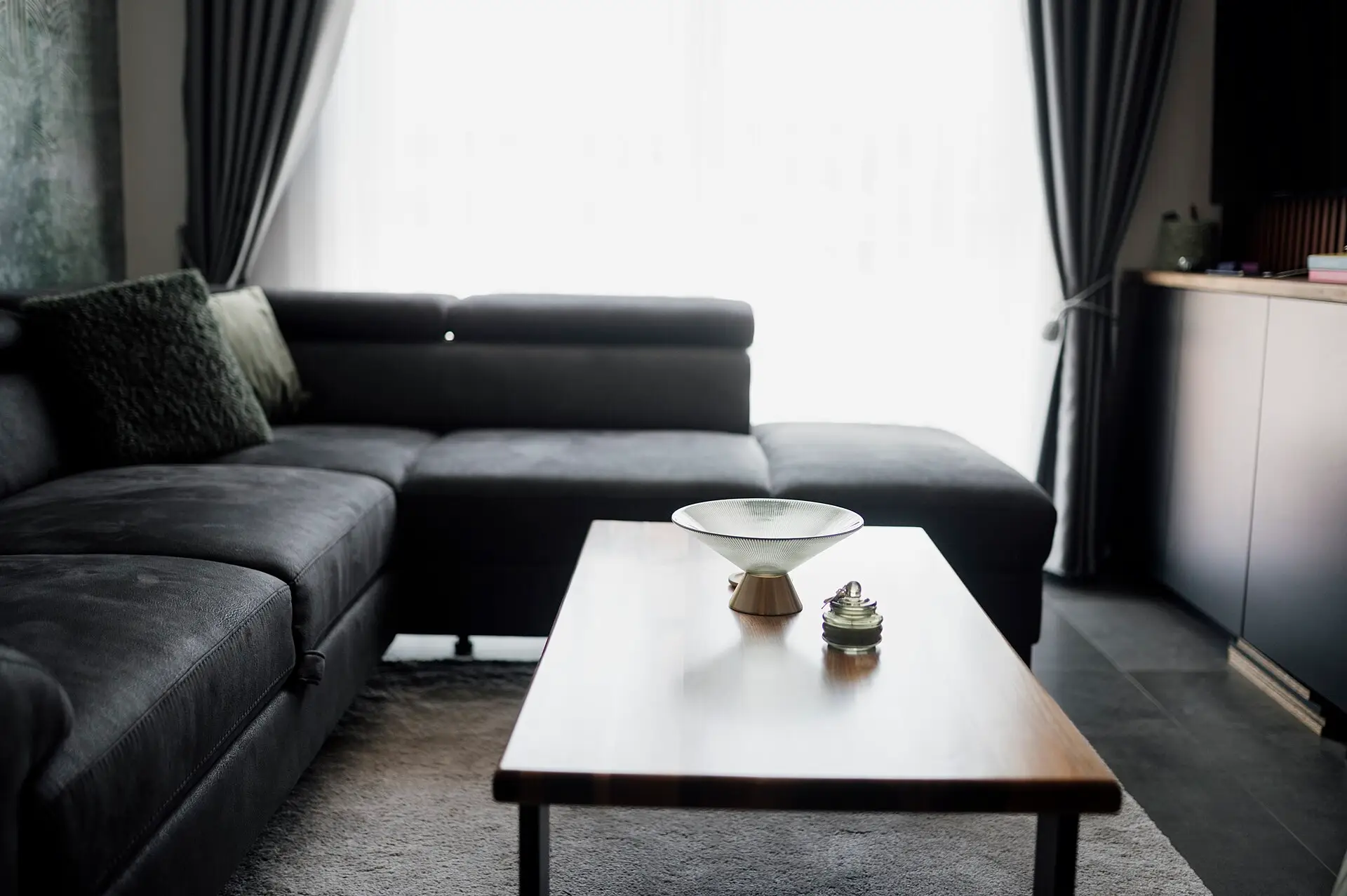
Windows are thin compared with walls. Thermal and blackout curtains add a fabric layer that slows heat loss at the glass — useful in heating season and for rooms that bake in afternoon sun. Start by finding which rooms lose the most heat through glass. Then choose thermal, blackout or both, and hang them so gaps at the edges don’t undo the fabric.
When thermal curtains help your bill
They can help when:
- Large single-pane or older dual-pane windows make rooms feel cold at night or hot by mid-afternoon.
- You already fixed setpoints and dirty HVAC filters — glass loss is the next comfort lever.
- You will actually close curtains on cold nights (and on west-facing glass in cooling season) and open south-facing glass on sunny winter days.
- You rent or you are waiting on a window replacement and need a reversible upgrade.
They usually won’t help much when:
- Windows are already high-performance sealed units and you leave thin decorative sheers open 24/7 anyway.
- The real driver is a wide-open attic, failed HVAC, or door gaps you can see daylight through (see attic insulation and weatherstripping).
- You buy “thermal” marketing labels but hang panels that don’t cover the glass or sit inches off the wall with big light gaps.
The reality: Curtains reduce heat transfer at the window when they cover the opening and you use them. Manufacturer “up to X% energy” claims are lab/best-case — we do not guarantee a dollar cut. Savings scale with climate, rates, window quality, and HVAC runtime. Treat panels as a daily-use layer, not a substitute for attic air sealing or a failed heating system.
Check your home before you buy
Ordering a whole-house carton of “thermal blackout” before a 15-minute walk is how you end up with short panels on tall glass and a sagging rod that opens a draft strip at the top. Do this once:
- Feel cold glass after sunset (or hot west glass mid-afternoon) — walk each exterior window with the back of your hand. Note cold glass vs air moving at the sash/stop (edge leaks → weatherstrip first).
- List rooms by hours of occupancy — primary bedroom, living/family room, home office beat a guest closet you’ll never close.
- Note orientation — west/east for summer solar gain; north and large glass walls for winter cold-glass comfort; south for daytime solar harvest (you’ll want to open those on sunny winter days).
- Measure opening + planned mount — width of glass/trim, then add side overlap (often 3–6″ each side, more for a wrap that cuts side gaps). Length for sill vs floor; leave clearance above heaters.
- Check the existing rod — skinny rods sag under thermal fabric. If it already bows with sheers, buy a sturdy ~1″ rod before or with the panels.
- Safety pass — space heaters, radiators, combustion air, egress, dryer vents (see do-not-curtain list below). Safety beats a cozy draft fix.
If you still can’t tell whether glass or a door gap is the villain, seal the door first with a sweep from the weatherstripping guide and re-check — thick drapes won’t fix a banana-shaped exterior door.
Room-by-room: which windows get thermal panels first
Do these first
- Primary bedrooms that fight the thermostat overnight — close thick panels at dusk; pair with oil-filled zone heat only with safe fabric clearances.
- Living / family rooms with cold glass walls — long evening hours; mount high and wide.
- Home office / daytime rooms with west or east glass that overheats — shade before you crank AC.
- Media rooms / nurseries — lined blackout often beats thin “thermal” marketing fabric.
- Patio / sliding glass doors — heavy rod + full overlap; add shrink film if the door still howls.
These can wait
- Guest rooms you rarely use; already-good sealed dual/triple-pane with no cold-glass complaint (attic may matter more); windows you must leave open daily for pets or ventilation.
What not to do
- Space heaters and oil-filled radiators — keep fabric well clear; never drape over portable heat.
- Baseboard / steam radiators / wood stoves — sill-length or holdbacks; if clearance is impossible, use film + weatherstrip instead.
- Combustion air paths — never block dryer vents, range hoods, bathroom fans, furnace/water-heater intakes, or fireplace make-up air.
- Bedroom egress — curtains must open quickly; don’t immobilize the only exit. Prefer curtains over permanently filmed egress glass while people sleep there.
- Candles, cooktops, oven splash — no floor-length panels over a range.
- Cheap drywall anchors alone — mount into studs or rated anchors; heavy pairs pull weak anchors out.
Curtain the worst two rooms first, live with open/close habits through a cold snap (or a hot week), then decide if more rooms are worth it.
Curtains vs film vs weatherstrip vs pro replacement
| Job | Better tool |
|---|---|
| Daily open/close + privacy + light control | Thermal / blackout curtains (this page) |
| Seasonal seal on leaky single-pane glass | Indoor shrink-film kits |
| Door bottoms, sash stops, daylight under doors | Weatherstripping & sweeps |
| Baseboards, penetrations, exterior-wall outlets | Caulk, foam & outlet gaskets |
| Whole-envelope / attic air sealing | Attic insulation approaches |
| Rotten sash, fogged IGUs, structural failure | Pro window replacement — curtains are a bridge, not a remodel |
You can stack tools: weatherstrip the edges, film the worst winter glass plus bedroom curtains for night coverage is common. Don’t film an egress bedroom shut while occupied for sleeping. Curtains do not replace a failed furnace or a wide-open attic hatch.
Which one should you buy?
Use this before you cart six colors of “thermal”:
- Sleep/media dark and warmer glass? → Thermal + blackout (or lined blackout). Title word “thermal” alone isn’t enough — look for liner or multi-layer weave.
- Mainly light block (shift work / nursery)? → Lined 100% blackout first; thermal is a bonus if the liner is real.
- Mainly winter cold-glass comfort? → Thicker thermal/insulated panels; still cover the glass fully.
- Grommet vs back-tab vs rod pocket? → Grommet for daily open/close on ~1″ rods; back-tab for a cleaner header (buy enough panels); rod pocket can bind on heavy fabric — skip if you open thick pairs every day.
- 2-pack vs single? → Most windows → 2-pack whose combined width covers opening + overlap. Odd widths → single panels (e.g. Cyrus) so you can buy 3 or 5.
- Rod sagging or missing? → Buy the rod first (or same order). Heavy panels on a skinny rod create a top draft strip that wastes the purchase.
- Still undecided vs other tools? → Edge leak → weatherstripping. Seasonal sealed glass → shrink film. Fogged/rotted glass → contractor quote; curtains are a reversible bridge.
Measure tip: Listing sizes are per panel or pair. A “50×84 2-pack” is two panels — confirm total coverage width.
What “thermal” and “blackout” actually mean
- Blackout = light blocking (sleep, media rooms). Often correlates with thicker fabric, but not always with the best insulation.
- Thermal / insulated = woven or lined layers that slow heat transfer. Look for a real liner or multi-layer weave, not just the word “thermal” in the title.
- Grommet vs back-tab vs rod pocket: Grommets slide easily on thick rods; back-tabs look cleaner; rod pockets can bind on heavy panels.
Safety: Keep curtains clear of space heaters, radiators, candles, and stove/oven splash. Do not block required combustion air, dryer vents, or bedroom egress. Mount hardware into studs or use rated anchors — heavy drapes pull cheap drywall anchors out.
Renters: tension rods or existing brackets avoid new holes when leases are strict; keep original hardware. Test that a tension rod can hold thermal weight before you trust it overnight. Mount high and wide when you can — a frame-hug mount leaves more edge leak.
Hang / install troubleshooting
| Symptom | Likely cause | Fix |
|---|---|---|
| Light or draft at the sides | Rod too narrow; panels don’t wrap past trim | Remount wider; add overlap; use return brackets toward the wall when possible |
| Gap / draft over the top | Rod too low or sagging; panels sit away from wall | Mount higher above trim; upgrade to ~1″ sturdy rod; center support on wide spans |
| Center light leak at night | Panels don’t overlap in the middle | Overlap 2–4″; use a magnetic or clip overlap if fabric separates |
| Curtains “too short” after hang | Measured glass only, not mount height; wrong length SKU | Remeasure from rod to desired hem; exchange for longer panels |
| Rod bows in the middle | Fabric too heavy for skinny rod / missing center bracket | Switch to 1″ rod; add center support; split into two rods on very wide glass |
| Fabric near heater / radiator | Floor-length on a heat source wall | Raise hem, sill-length, or holdbacks; keep clearances — never drape over portable heat |
| Grommets bind / hard to open | Rod diameter too large or rough finish | Confirm grommet ID vs rod; switch hang style or rod finish |
| Anchors pull out of drywall | Heavy pair on plastic anchors only | Remount into studs or rated anchors; don’t leave a half-fallen rod |
If edges still leak after a solid hang, fix door/sash daylight with weatherstripping — curtains are a face layer, not a door sweep.
Shortlist: thermal & blackout curtains (and a rod)
We earn a commission if you buy through these Amazon links, at no extra cost to you. Check size and fit on the listing before you order.
Best everyday thermal blackout pairSun Zero Columbia (2-pack)
Clear “thermal + blackout” positioning, grommet hang for easy open/close, sold as a pair so one listing often covers a standard window when sized correctly.
Watch-outs: Confirm width × length for your mount. Color lots vary. Energy % claims on the box are marketing ceilings, not your bill.
- Sun Zero Columbia thermal blackout 2-pack Check price on Amazon
Best heavier theater-grade blackoutSun Zero Nordic (2-pack)
Thicker thermal-blackout build aimed at total light block and noise reduction — useful for bedrooms that also feel cold at the glass.
Watch-outs: Heavier fabric needs a stronger rod. Recheck the panel width and length on the listing before buying for short windows.
- Sun Zero Nordic theater-grade blackout 2-pack Check price on Amazon
Best single-panel back-tab optionSun Zero Cyrus
Sold per panel with hidden back tabs — handy when you need an odd number of panels or a cleaner header than grommets.
Watch-outs: Buy enough panels for full coverage; one panel alone rarely covers a wide window.
- Sun Zero Cyrus thermal blackout panel Check price on Amazon
Best lined blackout for nurseries / day sleepNICETOWN dual-layer
Sewn black liner focus (true light block) with thermal-insulated framing — popular for rooms where sleep schedule matters as much as comfort.
Watch-outs: White shows dust; follow care labels. Confirm grommet inner diameter matches your rod.
- NICETOWN 100% blackout lined panels (2-pack) Check price on Amazon
Solid budget thermal pickDeconovo blackout panels
Widely available sizes and colors for covering several rooms without a luxury drapery budget.
Watch-outs: Quality and exact opacity vary by color/SKU — read recent size reviews for the exact length you need.
- Deconovo blackout / thermal panels Check price on Amazon
Don’t skip the rodAmazon Basics 1″ heavy curtain rod (72–144″)
Thermal panels sag on flimsy rods. A 1″ adjustable rod that spans wide openings keeps the header tight so less heat sneaks over the top.
Watch-outs: Mount into studs when you can; rated anchors otherwise. This SKU is the long (72–144″) range — add a center support on very wide spans.
- Amazon Basics 1″ curtain rod, 72–144″ Check price on Amazon
How to use curtains for the bill (not just decor)
Heating season: Close panels at dusk on cold glass; open south-facing curtains on sunny winter days for free solar gain. Overlap panels in the middle — a big center gap defeats the point at night. After drafts drop, ease setbacks only if comfort holds (smart thermostat guide).
Cooling season: Close west- and east-facing blackout panels during peak sun; open after the glass cools. Pair with window AC / ceiling fan tactics — curtains cut load; controls decide runtime.
Stack: seal edges (weatherstripping), add shrink film on the worst winter glass if drafts remain, hang panels you’ll actually operate, and keep HVAC filters clean.
What not to expect
- Curtains will not fix a failed furnace, undersized heat pump, or missing attic insulation.
- Leaving blackout panels closed 24/7 on south glass in winter can increase heating need by blocking useful sun.
- “Guaranteed $X/month” claims ignore your rate and climate — treat them as ads. Side gaps and a sagging rod can erase most of the comfort gain.
FAQ
Will thermal curtains lower my heating bill this winter?
They can help when large or older windows feel cold at night and you actually close thick panels that cover the glass with minimal side gaps. Savings scale with climate, rates, window quality, and HVAC runtime—we do not guarantee a dollar cut. Thin sheers left open 24/7 will not move the bill.
Are blackout curtains the same as thermal curtains?
Not always. Blackout means light blocking; thermal/insulated usually means lined or multi-layer fabric that slows heat transfer. Many products combine both, but a marketing “thermal” label without a real liner may mainly block light. Look for thickness and coverage, not just the title word.
Should I use curtains, shrink film, or weatherstripping first?
Use curtains for daily open/close privacy and night coverage. Use indoor shrink-film kits for a seasonal seal on leaky single-pane glass. Use weatherstripping for door bottoms and sash edges. Stacking film plus bedroom curtains is common—don’t film an occupied egress bedroom shut.
How should I measure before buying thermal panels?
Walk the house first, then measure each opening: add side overlap (often 3–6 inches each side) and choose length for floor or sill coverage while keeping fabric clear of heaters. Mount a sturdy rod high and wide so less heat sneaks over the top; most listings are two panels—confirm total width. Buy the rod before or with the panels if your current rod sags.
Why do my blackout curtains still leak light or feel drafty at the edges?
Usually side gaps, a rod mounted too narrow/low, panels that don’t overlap in the middle, or fabric that doesn’t reach the sill/floor. Mount wider and higher, add overlap, use return brackets toward the wall when possible, and fix door/sash edge leaks with weatherstripping—curtains alone won’t seal a daylight gap under a door.
Related reading
- Window insulation kits — shrink film when curtains aren’t enough
- Cellular / honeycomb shades for winter — fitted insulating shades for tight recesses; stack curtains over them on the coldest glass
- Radiator heat reflectors for exterior walls — foil behind radiators under the same cold windows
- Weatherstripping & draft stoppers — seal edges before fabric layers
- Sliding glass / patio door draft sealing for winter — curtains vs film vs pile on drafty patio doors
- Oil-filled space heaters for zone heating — warm one room; keep clearances
- Window AC smart controllers & ceiling fans — shade first, then cut cooling runtime
- Air sealing: caulk, foam & outlet gaskets — leaks curtains never touch
- Priority checklist · Start Here
Bottom line
For drafty or high-gain US windows, thermal / blackout curtains are a reversible, daily-use layer that improves comfort and can reduce HVAC runtime when you close and open them on purpose. Walk the house first, prioritize lived-in cold-glass rooms, buy a rod that holds the weight, hang wide and high, keep safety clearances, and stack with weatherstripping or film where those tools fit. Broader order of operations: Start Here or the priority checklist.
Some links on this page go to Amazon, and we earn a commission if you buy, at no extra cost to you. Prices and savings vary by home and utility rate. More in our disclosure.