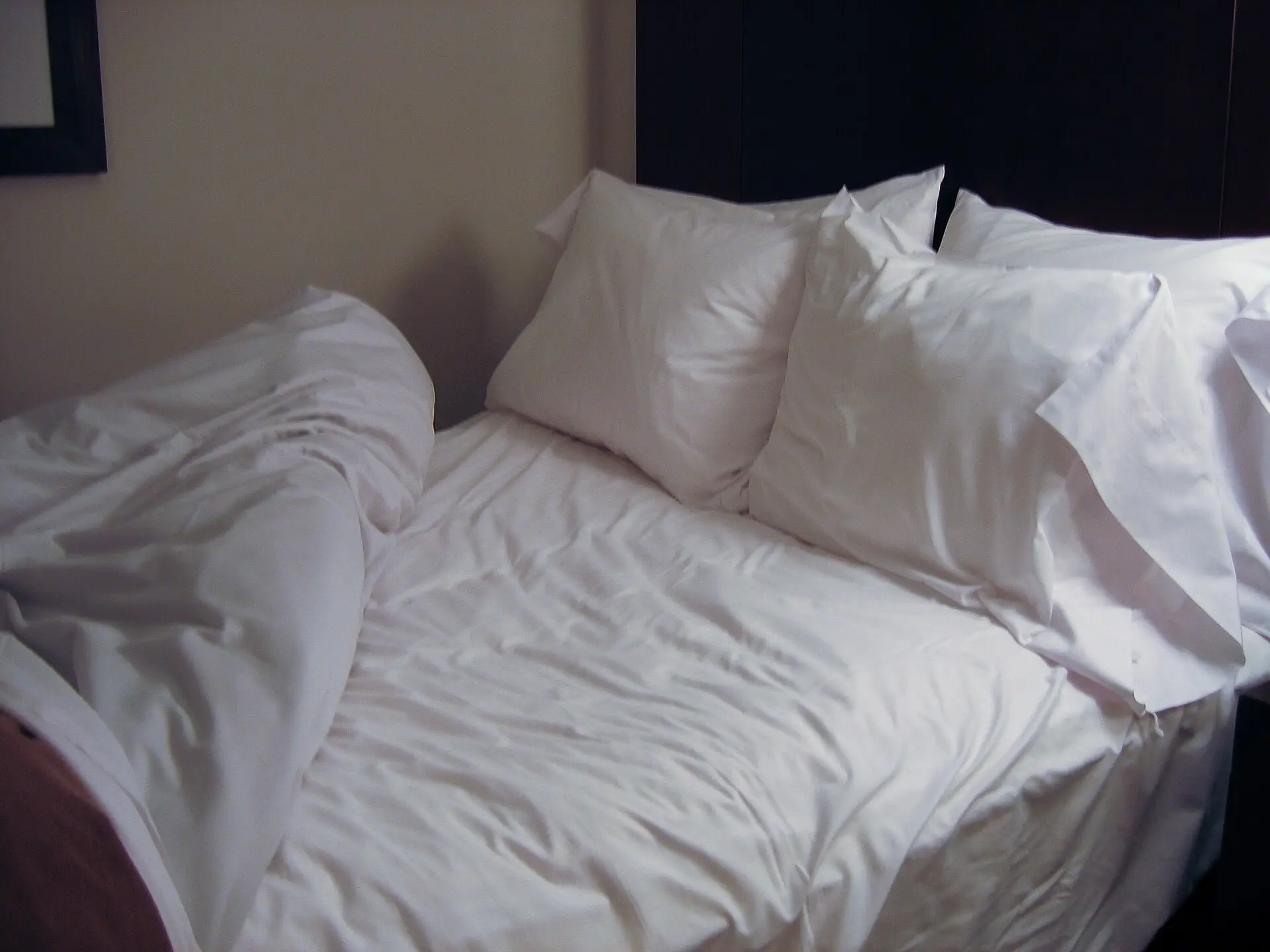
Heating empty bedrooms all night is expensive. Warming the bed (and the person in it) with a heated mattress pad while you drop the whole-house overnight setpoint is a quieter, lower-wattage cousin of oil-filled space-heater zone heating — when you actually change the thermostat and follow safety rules. A heated pad helps in some bedrooms and not others. We’ll show how to check your sleep setup and compare pads, blankets, SoftHeat and oil-filled heaters.
When bed-zone heat actually moves your bill
Think of overnight comfort as two separate loads: keeping the sleeper warm and keeping the whole house at daytime temperature. Heated bedding attacks the first load with tens to a couple hundred watts at the mattress. Central heat attacks the second with kilowatts of furnace, boiler, or heat-pump auxiliary. Bill leverage appears when you trade some of that central runtime for bed-zone warmth — not when you add bed heat on top of the old schedule.
Pads help most when:
- You can safely lower the overnight heating setpoint a few degrees (everyone in the house is comfortable and healthy at that setting).
- The primary load you’re cutting is electric resistance heat, an electric furnace, or heat-pump auxiliary/emergency heat on cold nights.
- You sleep in one bed (or dual-control sides) and don’t need every room at daytime temperatures overnight.
- You’ll use auto shut-off / timers and a modest heat setting after preheat — not “High” all night with the furnace left alone.
- Bedroom drafts are tolerable (or you’ve already sealed the worst leaks) so a modest setback doesn’t force you awake.
They help less — or backfire — when:
- You leave the central thermostat unchanged and add heated bedding. That’s additive load, not a strategy.
- Someone in the home cannot tolerate cooler overnight air (infants, certain medical needs) — personal heat doesn’t replace a safe ambient plan.
- The bedroom is a sieve and you’re chasing comfort that sealing would fix cheaper first.
- You run a 1500 W space heater in the bedroom all night plus a heated pad plus a high central setpoint. That’s stacking.
- You buy a pad for a Twin guest bed you never sleep in while the master suite stays on the old furnace schedule.
The reality: Heated bedding uses far fewer watts than heating a whole room or whole house — but bill impact only shows up if central heat runs less. Your rates, climate, envelope, and setpoint discipline decide the outcome.
Check your home before you buy
Wrong size, wrong controller layout, or no real setback plan = comfort spend with no bill story. Spend ten minutes with a tape, an outlet check, and an honest look at how you actually sleep before you click “Buy.”
- Mattress size and depth — Read the mattress label (Twin / Twin XL / Full / Queen / King / Cal King), not the sheet-set nickname you use casually. Measure depth including any topper; deep-pocket skirts often claim ~15–18″ — thick hybrids and pillow-tops eat that fast.
- Outlet reach and cord path — Note which side of the bed has a reachable outlet. Controllers need to hang without yanking the cord under the mattress edge. Dual-control models need two reachable controller positions (or one long-enough cord path) without daisy-chaining sketchy extension cords.
- Dual vs single sleeper — One cold sleeper who forces a warmer house overnight defeats the setback. If two people share the bed and fight over temperature, plan on dual controllers (or separate beds), not “High for both.”
- Overnight thermostat setback — is it actually possible? — Check who else sleeps in the house, medical constraints, pets that can’t tolerate cold, and whether your thermostat already has a reliable sleep schedule. If you cannot drop overnight setpoint safely, a pad is comfort gear — price it that way, don’t invent a bill ROI.
- Draft walk of the bedroom — On a breezy evening, feel the window sash, exterior door, and under the bedroom door. Daylight at the sash or a whistling weatherstrip argues for window film, weatherstripping, or thermal curtains the same weekend — or before — you buy heated bedding.
- Do you also need awake room-air heat? — If you work, read, or watch TV in the cold bedroom for hours, a pad alone won’t warm the air. Plan an oil-filled heater for awake hours or accept that you’ll still need more ambient heat — and still drop the central setpoint when you can.
- Power-strip / GFCI / circuit reality — Many bedrooms share a circuit with lamps and chargers. Note whether the outlet is GFCI-protected, whether a power strip is already overloaded, and whether adding a pad (and especially a 1500 W heater) risks trips. Prefer a dedicated wall outlet for heated bedding; never run high-watt heaters through flimsy strips.
Write size, depth, “dual? Y/N,” “setback possible? Y/N,” and “drafts? Y/N” on a sticky note before you open Amazon.
What to do first
Do these first
- One primary sleep bed, electric or heat-pump heat with high overnight runtime, and a household that can take a modest overnight setback — buy a correctly sized pad (dual-control if couples disagree on temp).
- Cold sleeper + warm sleeper on the same mattress — dual controllers beat cranking the furnace for one person.
- Drafty bedroom already on the list — seal windows/doors the same weekend so the setback sticks (weatherstripping, window kits, curtains).
- Guest room you actually use on cold nights — Full-size pad when the mattress is Full; don’t overbuy King.
- Prefer low-voltage / micro-wire feel — SoftHeat-style pads after you’ve confirmed size and dual needs, not instead of a setback plan.
These can wait
- Buying heated bedding while leaving the thermostat on the old schedule “to see how it feels” — that’s additive load research, not a bill strategy.
- Electric blankets as the first overnight tool when a flat mattress pad would fit — blankets are fine as top layers / couch / guest throws.
- A second pad for a rarely used daybed while the master suite still runs full overnight heat.
- Stacking a new pad with a continuous 1500 W bedroom heater and no setpoint change.
- Fancy feature chasing (extra heat settings, app claims) before size, dual control, and auto shut-off are settled.
What not to do
- Infants, some medical conditions, and people who cannot feel heat normally — many manuals forbid or tightly restrict use. Personal heated bedding is not a substitute for a clinician-approved ambient plan. When in doubt, don’t buy for that sleeper.
- Do not fold, pin, or tightly tuck heating wires under the mattress edge. No safety pins through the pad. Creased wires are a classic failure mode.
- Do not stack a heated pad + heated blanket + 1500 W space heater + no thermostat setback. That’s misuse dressed up as “zone heating.”
- Pets that chew cords or dig at bedding — inspect daily; unplug and replace at the first nick. Chewed insulation is a hard stop.
- Damaged cords, hot spots, scorch marks, or controller errors — unplug and replace. Don’t “just use the other side.”
- Adjustable bases, waterbeds, and some foam setups — check the manual. If the maker forbids use on your base or bed type, don’t.
- Soaking wet controllers, bathroom splash zones, or washing with the controller attached — follow wash instructions exactly; detach first.
If any do-not item applies to the intended sleeper or bed, pause the Amazon cart — comfort gear that fights the manual is not a bill win.
Mattress pad vs electric blanket vs space heater
| Option | Best when | Watch-outs |
|---|---|---|
| Heated mattress pad | Primary recommendation for most people — heat under the fitted sheet, wires stay flatter, less bunching | Must match mattress size & depth; dual controls for couples; follow wash instructions |
| Electric blanket | You want a top layer, guest bed, or couch throw use-case | Easier to fold/tuck incorrectly; don’t pile heavy comforters that trap heat against wires unless the manual allows |
| SoftHeat-style low-voltage pad | You want micro-thin wires / listed low-voltage design and dual zones on the size you need | Still follow all bedding rules; confirm brick placement and dual layout; not a substitute for setbacks |
| Oil-filled space heater | You need room air warm for sitting/working, not just sleep | ~1500 W; fire clearances; see the oil-filled zone heating guide |
Comparing a bedroom space heater’s nightly cost with a pad? The space heater cost-to-run guide works through 1,500 W and 750 W nights at example rates.
Rule of thumb: start with a mattress pad for overnight sleep + thermostat setback. Choose SoftHeat when wire-feel / low-voltage design is the deciding factor. Add an oil-filled heater only when you also occupy the room awake and still need air warmth — and still drop the central setpoint. Seal drafts when the bedroom fights every setback.
Which one should you buy?
Use this as a quick filter — then buy only what your own checks support.
- Can everyone in the home safely take a modest overnight thermostat setback?
- Yes → go to step 2 (bill strategy is in play).
- No → you may still buy a pad for personal comfort, but don’t invent a bill ROI; fix ambient/medical constraints first.
- Is the bedroom a draft sieve (daylight at sash, whistling door, ice-cold glass)?
- Yes → seal-first the same weekend: weatherstripping, window insulation kits, thermal curtains. Then continue.
- No / already sealed → continue.
- Do you mainly need sleep warmth, or awake room-air warmth too?
- Sleep only → heated mattress pad (default).
- Awake room air for hours → plan an oil-filled heater for sit-time and a pad for sleep if needed — still drop central setpoint.
- One sleeper or two with different preferred temps?
- One / same prefs → single-control pad in the correct size is fine.
- Two who fight over temp → dual-control pad (or dual blanket only if you insist on a top layer).
- Wire-feel / low-voltage preference?
- Yes → SoftHeat-style low-voltage pad in your size (dual if couples).
- No preference → mainstream quilted pad (Sunbeam Restful / Quilted lines below).
- Top-layer / couch / guest throw instead of under-sheet heat?
- Yes → electric blanket as secondary choice; still no fold/pin stacking.
- No → stick with the pad.
- Mattress type restricted (waterbed, some adjustable bases, maker forbids)?
- Restricted → don’t buy that pad for that bed; pick a compatible product or skip heated bedding.
Pads vs other bill moves: Heated bedding is a sleep-zone tool. It does not replace thermostat schedules, envelope sealing, or the priority checklist order of operations. Stack cheap envelope and schedule fixes first when the checklist says so.
How to use heated bedding for bill impact
- Preheat the pad 15–30 minutes before bed on a medium setting so you’re not jumping into a cold sheet and cranking “High” for hours.
- Set a modest whole-house overnight setback on your thermostat — within comfort/health limits for everyone home. Write the old and new setpoints down so you can reverse if someone sleeps poorly.
- Sleep on a low-to-medium setting with auto shut-off engaged (or let it hold a low setting if your model is designed for all-night use — follow the manual). Resist “High all night” as a default.
- Couples: use dual controllers so one person doesn’t force the whole house warmer. Agree on a house setpoint before negotiating mattress sides.
- In the morning, return the thermostat on a schedule before the house needs full recovery heat all at once on the most expensive rate window (especially on time-of-use plans).
- Keep the bedroom envelope honest: close curtains at dusk, don’t leave a window cracked “for fresh air” all night in heating season unless you intentionally accept the load.
- Track kWh on the next bill (or a home energy monitor). If usage rose, you’re stacking heat — revisit setpoints, heater use, and whether the pad is on High unnecessarily.
- Seasonal storage: unplug, detach controllers, store dry and loosely rolled per the manual — not tightly folded mid-wire.
Install / first-use troubleshooting table
| Symptom | Likely cause | What to try |
|---|---|---|
| Uneven heat / cold spots | Pad wrinkled, folded under edge, protector trapping a crease, or mattress depth stretching the skirt | Smooth flat under fitted sheet; don’t pinch wires; confirm deep-pocket fit; re-seat after first wash |
| Controller error / won’t power | Cord not fully seated, GFCI trip, damaged cable, or failed controller | Reseat connectors; check GFCI/outlet; try the wall outlet without a strip; unplug and replace if errors persist |
| One side cold (dual models) | Only one controller on, zone set to Off/Low, or one cord unplugged | Confirm both controllers and both cords; match settings; swap controllers if the manual allows to isolate a bad unit |
| Breaker or GFCI trips | Shared bedroom circuit overloaded (pad + heater + appliances) or fault in cord | Move heater to another circuit; never stack 1500 W + pad on one strip; stop use if trips repeat with pad alone |
| Won’t fit deep mattress / skirt pops off | Mattress + topper deeper than skirt claim | Measure depth; choose a deep-pocket model; remove an extra topper if needed; don’t stretch-pin the pad |
| Hum / click from controller | Normal relay/thermostat cycling on some digital units | Place controller off the pillow; if loud buzzing or burning smell — unplug and replace |
| Next-bill kWh went up | Thermostat left alone, High all night, or oil-filled heater stacked | Enforce overnight setback; lower pad setting; stop stacking room heat; review priority checklist |
| Hot spot or scorched fabric | Folded wires, pin through pad, pet damage, or failing element | Unplug immediately; do not keep using; replace the unit |
| Pets chew the cord | Cord routed where animals play | Reroute out of reach; inspect daily; replace at first nick — chewing is a hard stop |
| Wash cycle ruined controller | Washed with controller attached | Controllers are usually not washable — detach first next time; replace if water-damaged |
Safety first
Electric bedding is safe when used as designed — and hazardous when folded, soaked, chewed, or used against manufacturer rules.
- Buy units with auto shut-off and follow the age / medical / pet guidance in the manual. Many manufacturers restrict use for infants, some medical conditions, and people who cannot feel heat normally.
- Do not pinch, fold, or tuck heating wires tightly under the mattress edge. Don’t stick pins or needles through the pad.
- Prefer a flat mattress pad under the sheet over a heavily folded blanket sandwich.
- Keep controllers and cords off the floor wet zones; don’t use a damaged cord.
- Pets that chew and kids who jump on beds need extra caution — inspect the pad regularly.
- Confirm compatibility with adjustable bases, memory foam, and waterbeds before buying — many pads list limits.
- Unplug and store dry in summer; wash only as the manual allows (usually controller detached).
- Working smoke alarms still matter. Electric bedding doesn’t produce CO, but misuse still starts fires.
- Don’t treat “zone heating” as permission to run a pad, a blanket, and a 1500 W heater with no thermostat setback.
If the pad smells of burning, has hot spots, or the controller errors — unplug and replace.
Our picks
We earn a commission if you buy through these Amazon links, at no extra cost to you. Check size and fit on the listing before you order.
Best everyday Queen padSunbeam Restful Quilted (Queen)
Best for: Most Queen beds that want a modern digital controller, deep-pocket skirt (up to ~18″ on this line), 12 heat settings, and selectable auto shut-off without going full dual-zone yet.
Watch-outs: Confirm your mattress depth and size before ordering. Detach the controller before washing. Pair with a real overnight thermostat setback or you’re just buying comfort, not a bill strategy.
- Sunbeam Restful Quilted Heated Mattress Pad, Queen Check price on Amazon
Best King match to the same lineSunbeam Restful Quilted (King)
Best for: King mattresses that want the same Restful Quilted feature set as the Queen listing above.
Watch-outs: King footprints and controller placement differ — plan outlet reach. Dual-control models (below) are better when two sleepers want different temps.
- Sunbeam Restful Quilted Heated Mattress Pad, King Check price on Amazon
Best dual-control classic QueenSunbeam Quilted with EasySet Pro controllers
Best for: Couples on a Queen who need his/hers controllers and a long-running Sunbeam quilted pad with 10 heat settings and auto-off.
Watch-outs: Older controller UX than the newest Restful line — still verify dual zones on the size you order. Don’t share one high setting “for both” if one person overheats.
- Sunbeam Quilted Heated Mattress Pad, Queen, dual EasySet controllers Check price on Amazon
Best Full-size starterSunbeam Quilted (Full)
Best for: Full/double mattresses and guest rooms where you want a simple quilted pad with ThermoFine-style sensing and auto-off — not a King/Queen overbuy.
Watch-outs: Measure the mattress; “Full” is not Queen. Guest-room pads still need the same no-fold / no-pin rules.
- Sunbeam Quilted Heated Mattress Pad, Full Check price on Amazon
Best dual-control Queen pad with a long guaranteeBwarm
Best for: Couples who run hot and cold. Each side gets its own controller with 9 heat settings and a 1–12 hour auto-off, and the 18″ deep pocket fits most thicker mattresses.
Watch-outs: It’s a standard wired pad, not a low-voltage design, so follow every bedding rule on the tag. Check your mattress depth before ordering.
- Bwarm heated mattress pad, Queen, dual control Check price on Amazon
Best electric blanket alternative (Queen)Sunbeam Royal Ultra Fleece
Best for: Preferring a top-layer heated blanket with a backlit digital controller, 12 heat settings, and selectable 1–12 hour auto shut-off — secondary to a mattress pad for most overnight strategies.
Watch-outs: Don’t tightly fold heated areas. Avoid sandwiching the blanket under multiple heavy comforters against manufacturer guidance. Pads are still the cleaner overnight default for most beds.
- Sunbeam Royal Ultra Fleece Heated Blanket, Queen (burgundy) Check price on Amazon
Sizing & dual-control notes
- Match Twin / Twin XL / Full / Queen / King / Cal King to the mattress label — not the sheet set nickname you use casually. A “Queen” sheet on a Full mattress does not make the mattress Queen.
- Check deep-pocket depth if you run a mattress topper or thick hybrid. Skirts that claim ~15–18″ still fail on pillow-top + topper stacks — measure before you buy.
- Dual controllers matter more for bill strategy than people think: one cold sleeper forcing a warmer house overnight defeats the setback. Dual zones keep the house cooler while each sleeper gets a personal setting.
- Place controllers where you can reach them without yanking cords under the mattress edge. Plan outlet sides on King/Cal King footprints especially.
- If your size isn’t in the shortlist above (Twin, Twin XL, Cal King), search the same product line on Amazon and confirm the ASIN/size on the product page — don’t guess from a Queen listing.
- Wash only with the controller detached; reconnect fully dry. Creasing a damp pad against a hot element is asking for trouble.
FAQ
Will a heated mattress pad lower my heating bill?
Only if you also lower the whole-house overnight setpoint within comfort and health limits. Pads use far fewer watts than heating empty rooms, but leaving the thermostat unchanged while adding bedding is additive load.
Mattress pad or electric blanket for overnight zone heating?
Start with a heated mattress pad under the fitted sheet for overnight sleep — wires stay flatter with less bunching. Use an electric blanket mainly as a top layer or guest/couch case. SoftHeat low-voltage pads are a design choice for wire-feel and listed safety features, not a free pass on setbacks. Add an oil-filled space heater only when you need awake room air warmth and still drop the central setpoint.
How should I use a heated pad so it actually cuts heating runtime?
Preheat 15–30 minutes, set a modest overnight thermostat setback, sleep on low-to-medium with auto shut-off (or all-night use only if the manual allows), and prefer dual controllers for couples. Seal bedroom drafts first when wind wakes you. If next-bill kWh rises, you’re stacking heat — revisit setpoints.
What safety rules matter most for heated bedding?
Buy auto shut-off units and follow age/medical/pet limits in the manual — many makers restrict infants, certain medical conditions, and people who cannot feel heat normally. Don’t pinch, fold, or pin wires; keep controllers dry; inspect for hot spots; confirm compatibility with adjustable bases and foam. Unplug if it smells of burning or the controller errors.
Should I seal the bedroom before buying a heated pad?
Often yes for comfort leverage. A pad warms the sleeper; it does not fix a sieve bedroom. Weatherstripping, window film, and thermal curtains cut the drafts that make you crank the house warmer overnight. Pads still help when you can set back — but sealing first usually makes the setback more tolerable.
Related reading
- Space heater cost to run: ceramic vs infrared vs oil-filled — what a 1,500 W bedroom heater costs per night vs warming just the bed
- Under-desk heaters & heated foot warmers — the daytime home-office version of warming the person
- Oil-filled space heaters / zone heating — room air heat when you need more than bedding warmth
- Best smart thermostats (2026) — overnight setbacks that make pads pay off
- Thermal / blackout curtains — bedroom envelope helpers
- Best weatherstripping and door draft stoppers — seal the sleep room first
- Window insulation kits for winter drafts — film the cold glass before you stack electric heat
- Priority checklist — zone heat after filters and schedules
- Start Here — ranked path for the whole site
Bottom line
Heated mattress pads are a sleep-zone heating tool: warm the person, then drop the overnight thermostat within safe comfort limits. Measure size, depth, outlet reach, dual-sleeper needs, and whether a setback is actually allowed before you buy. Prefer a flat pad under the sheet; use SoftHeat when low-voltage / wire-feel is the deciding factor; treat electric blankets as a secondary top layer; add oil-filled heat only for awake room air — and still change the setpoint. Seal the bedroom envelope when drafts fight every setback. Neither pads nor blankets replace HVAC basics, and neither saves money if you leave the furnace on its old schedule or stack High + 1500 W + no setback. For the broader order of operations, return to Start Here and the priority checklist.
Some links on this page go to Amazon, and we earn a commission if you buy, at no extra cost to you. Prices and savings vary by home and utility rate. More in our disclosure.