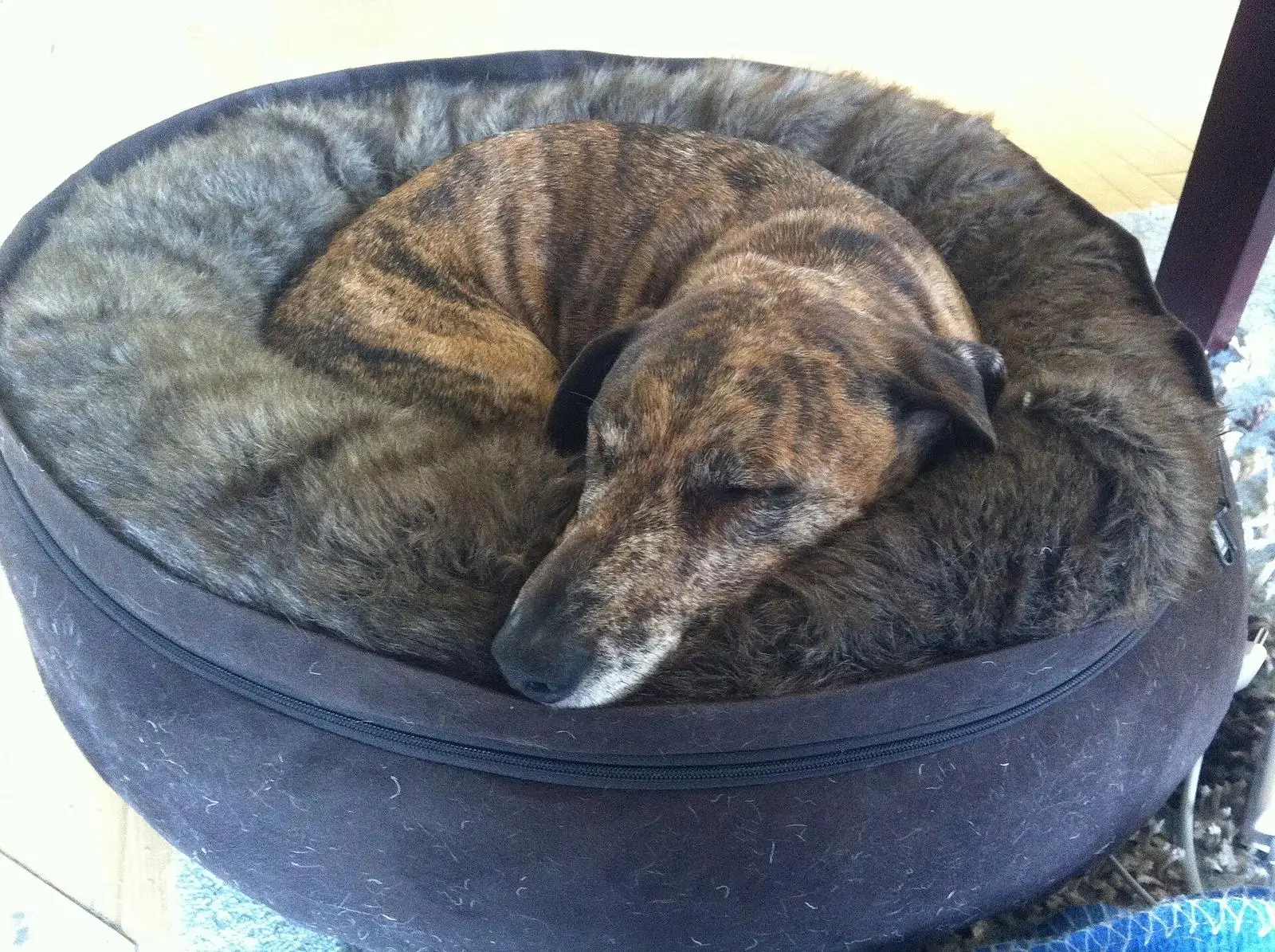
If you have an old dog with stiff hips, a cat that follows the sun around the house, or a few strays that live under the porch, you have probably wondered whether a heated bed is worth it, and what it will do to the electric bill. The short answer is that it’s one of the cheapest heaters you can buy. Pet beds run on 4 to 60 watts, about what a single light bulb used to draw, and most of them only warm up when the animal is lying on them.
The expensive mistake is going the other way: leaving a space heater on in the garage or turning the whole house up for the dog. Here is what the common heated beds, bowls and shelters cost to run, which ones are worth buying, and when you can skip the plug altogether.
The short version
- Indoor heated cat beds draw 4 to 6 watts. Even plugged in all year, that is about $6 at $0.17/kWh.
- Outdoor and garage pads draw 20 to 60 watts. Run nonstop, that is $2.45 to $7.34 a month.
- Heated water bowls draw 12 to 60 watts and cycle on and off. Expect a few dollars to about $20 for a winter.
- A 1,500-watt space heater left on overnight for a pet can cost more in a week than a heated pad costs all winter.
- Use pet-rated products, not human heating pads, and plug outdoor gear into a GFCI outlet.
What heated pet products cost to run
Find your real rate by dividing your bill’s total charge by the kWh you used. We use $0.17/kWh as a rough US average, with $0.12 and $0.25 for cheaper and pricier areas.
Cost for a 30-day month if the product drew its full rating around the clock. That’s the worst case: thermostatic beds and bowls run less than this.
| Product | Watts | kWh per month | $0.12/kWh | $0.17/kWh | $0.25/kWh |
|---|---|---|---|---|---|
| Indoor heated cat bed (K&H Thermo-Kitty Bed) | 4 W | 2.9 | $0.35 | $0.49 | $0.72 |
| Indoor heated cat mat (K&H Thermo-Kitty Mat) | 6 W | 4.3 | $0.52 | $0.73 | $1.08 |
| Insert warmer for a dog bed (K&H Pet Bed Warmer, large) | 13 W | 9.4 | $1.12 | $1.59 | $2.34 |
| Small outdoor pad, 18 x 14 in | 20 W | 14.4 | $1.73 | $2.45 | $3.60 |
| Heated water bowl, 96 to 102 oz | 25 W | 18.0 | $2.16 | $3.06 | $4.50 |
| Medium outdoor pad, 24 x 19 in | 40 W | 28.8 | $3.46 | $4.90 | $7.20 |
| Large outdoor pad, 36 x 25 in | 60 W | 43.2 | $5.18 | $7.34 | $10.80 |
| Bird bath de-icer | 80 W | 57.6 | $6.91 | $9.79 | $14.40 |
| 250-watt heat lamp | 250 W | 180 | $21.60 | $30.60 | $45.00 |
| Space heater on high | 1,500 W | 1,080 | $129.60 | $183.60 | $270.00 |
The last two rows are there for comparison. A heat lamp clamped over a dog bed draws as much as six medium outdoor pads, and a space heater on high draws as much as 25 large ones.
Heated water bowls over a winter
Bowls are where the numbers vary most, because their thermostats switch the heater on only when the water gets close to freezing. A bowl on a sheltered porch in a mild winter might run a quarter of the time. One in an open yard during a week of subzero wind might run nonstop.
Here is a 150-day season, roughly November through March:
| Bowl | Runs 25% of the time | Runs 50% | Runs nonstop |
|---|---|---|---|
| 12 W, 32 oz | $1.84 | $3.67 | $7.34 |
| 25 W, 96 to 102 oz | $3.83 | $7.65 | $15.30 |
| 30 W, two-bowl feeding station | $4.59 | $9.18 | $18.36 |
| 60 W, 5.5 quart | $9.18 | $18.36 | $36.72 |
All at $0.17/kWh. These are worked examples, not test results. Put the bowl out of the wind and it will run less. If you want your real number, plug it into a Kill A Watt meter for a cold week and multiply.
Why heating the bed beats heating the room
A 40-watt pad works because it puts its heat right where the animal is, under its belly, and the animal’s own fur and the bed’s foam hold that heat in. A space heater in a garage has to warm all the air in a room that leaks through the door seal, the walls and the slab. Most of that heat goes into the concrete and out the gaps.
The same logic applies inside. If you’ve been keeping the thermostat higher while you’re at work because the old dog shivers, a 13-watt warmer tucked in his bed costs about $1.59 a month even if it never shuts off. Our thermostat setback guide shows what each degree you turn back is worth over a winter, and it’s almost always more than that.
None of this means a pad replaces shelter. An animal sleeping outdoors still needs an insulated, windproof, dry space off the ground. The pad goes inside it.
What to do first
- Figure out who needs heat. Older, thin, short-haired, small and arthritic pets feel the cold most. A healthy husky in a good doghouse may not need anything plugged in.
- Fix the sleeping spot before you buy anything. Move the bed off cold tile or concrete and away from drafty doors and windows. For outdoor shelters, raise them off the ground and face the opening away from the wind.
- Try a powerless option for indoor pets. A self-warming pad or a microwavable heat disc is often enough for a cat in a cool room.
- For garages, porches, barns and shelters, pick a pad sized to the animal and rated for outdoor use.
- Check the outlet. Outdoor gear should go into a GFCI-protected outlet. If you don’t have one, have one installed before winter rather than running a long cord out a window.
- If water freezes, add a heated bowl and put it in the same sheltered spot as the bed.
What not to do
- Don’t use a human heating pad or electric blanket in a pet bed. They aren’t built for animals that can’t switch them off, and cords and wiring don’t stand up to claws and teeth.
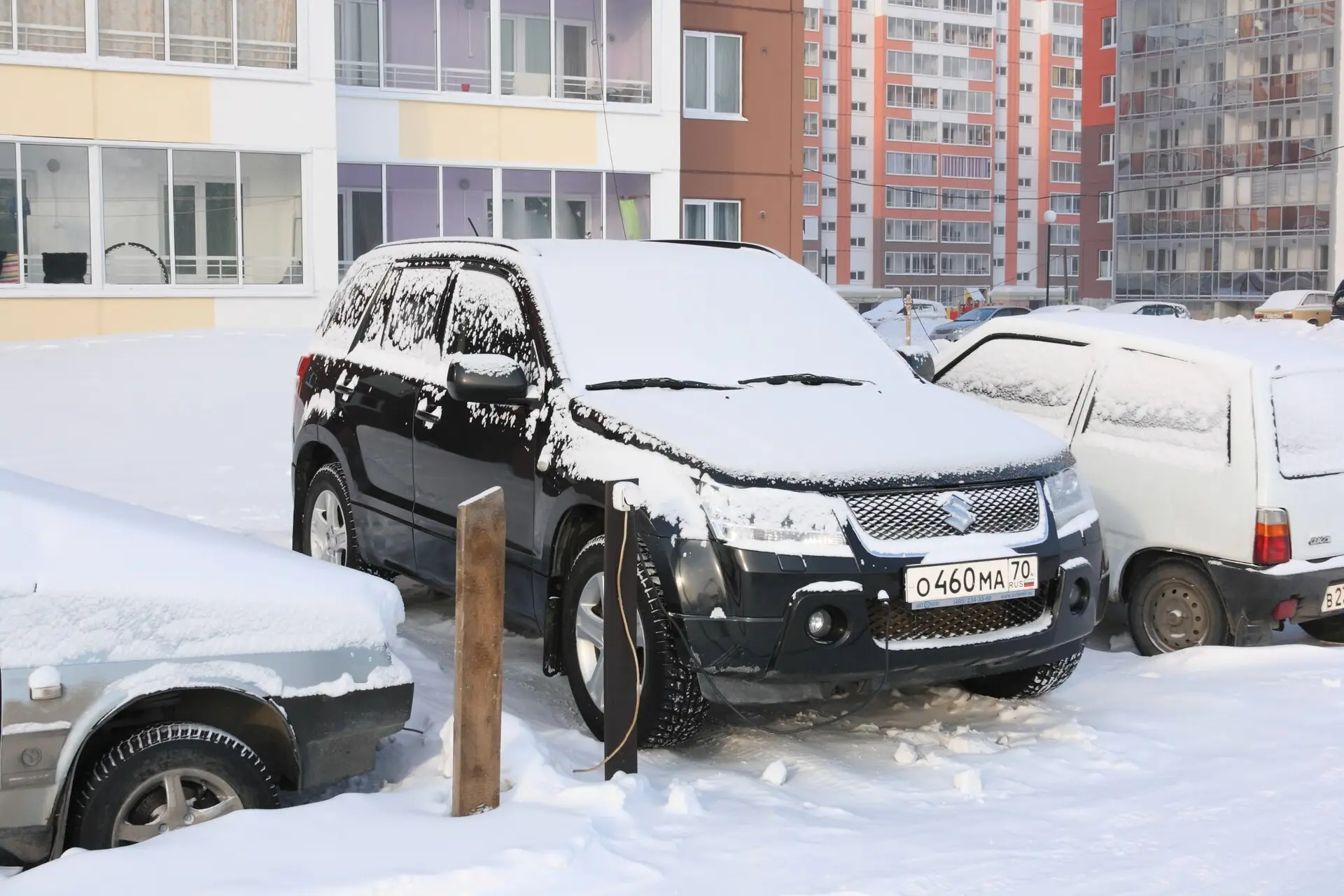
- Don’t clamp a heat lamp over a dog bed, doghouse or coop. Heat lamps get hot enough to ignite straw and bedding, and they’re a common cause of barn and coop fires every winter.
- Don’t leave a space heater running in a garage or shed for a pet overnight.
- Don’t put hay, blankets or towels in an outdoor shelter. Alley Cat Allies points out that they soak up moisture and leave the shelter wet and cold. Use straw.
- Don’t use an indoor bed outdoors. K&H’s Pet Bed Warmer, for example, isn’t designed for outdoor temperatures.
- Don’t add antifreeze, glycerin or salt to a pet bowl or bird bath to keep it from freezing.
- Don’t ignore a chewed cord. Unplug it and replace the product.
Which one should you buy?
For an indoor cat or a small dog that just likes to be warm, a K&H Thermo-Kitty Bed or Thermo-Kitty Mat is the easy choice. They draw 4 to 6 watts and cost well under a dollar a month.
If your dog already has a bed he loves, slip a Pet Bed Warmer inside it instead of replacing the bed.
For a dog or cat that sleeps in the garage, a mudroom, a barn or an insulated doghouse, get a Lectro-Soft pad sized to the animal. The 24 x 19-inch, 40-watt pad fits most medium dogs or a couple of cats. The 36 x 25-inch, 60-watt pad suits big dogs.
For strays and community cats, a heated shelter with two exits is the better buy than a bare pad, because it gives them wind protection and a warm floor in one.
If water freezes, a 25-watt Thermal-Bowl covers most cats and small to medium dogs. Bigger dogs or several animals drinking from one bowl need the 5.5-quart Farm Innovators bowl.
And if you would rather not plug anything in, a self-warming pad or a SnuggleSafe disc costs nothing to run.
Our picks
These are good starting points. Check the size, the indoor or outdoor rating and the wattage on the listing before you buy, and keep all cords where pets can’t chew them.
Best for indoor catsK&H Thermo-Kitty Bed
A round, foam-walled bed with 6-inch sides and a removable 4-watt heater, so you can pull the heater out in summer and keep using the bed. K&H says the thermostat keeps the surface at or just above room temperature when the bed is empty and warms it when your pet is inside. The small 16-inch bed is for pets under 15 pounds and the large 20-inch bed for pets over 15 pounds. Plugged in all year, it uses about $6 of electricity at $0.17/kWh.
- K&H Thermo-Kitty Bed, small 16-inch, 4 W Check price on Amazon
- K&H Thermo-Kitty Bed, large 20-inch, 4 W Check price on Amazon
Best flat matK&H Thermo-Kitty Mat
A 25 x 12.5-inch reversible mat with a removable 6-watt heater under the foam. K&H says it warms to about 102°F when your cat lies on it. It works on a windowsill, a chair or on top of a bed your cat already uses, and the cover is machine washable once you take the heater out.
- K&H Thermo-Kitty Mat, 6 W Check price on Amazon
To heat a bed you already ownK&H Pet Bed Warmer
A flat 11¾ x 24½-inch warmer that goes inside a dog bed and uses 13 watts. K&H recommends the large size for beds 25 to 50 inches long, placed in the center under at least ¼ inch of padding. Too much padding, or thick towels and blankets, can keep the surface from warming. It’s for indoor use only.
- K&H Pet Bed Warmer, large, 13 W Check price on Amazon
Best for garages, barns and doghousesK&H Lectro-Soft
An orthopedic foam pad with a waterproof heater, a fleece cover and a 5½-foot steel-wrapped cord. K&H says it warms the surface to your pet’s normal body temperature only when your pet is on it, and that it isn’t recommended for pets that chew. It comes in three sizes. Even the 60-watt large pad, run nonstop, costs about $7.34 a month at $0.17/kWh.
- K&H Lectro-Soft, 18 x 14 inches, 20 W Check price on Amazon
- K&H Lectro-Soft, 24 x 19 inches, 40 W Check price on Amazon
- K&H Lectro-Soft, 36 x 25 inches, 60 W Check price on Amazon
Best for outdoor and community catsK&H heated kitty houses
The Outdoor Heated Kitty House measures 19 x 22 x 17 inches, has two 6 x 8-inch exits with removable clear flaps so a cat is never cornered, and includes a 20-watt heated bed. The Thermo Mod Kitty Shelter is smaller, 14 x 21 x 13 inches, with a 25-watt bed inside. Put either one on a pallet or step, out of the wind, and plug it into a GFCI outlet.
- K&H Outdoor Heated Kitty House, 20 W Check price on Amazon
- K&H Thermo Mod Kitty Shelter, 25 W Check price on Amazon
Best heated water bowlK&H Thermal-Bowl
Thermostatically controlled bowls with the electronics sealed inside and a 5½-foot wrapped cord. The 32-ounce plastic bowl uses 12 watts. The 96-ounce plastic bowl and the 102-ounce stainless steel bowl use 25 watts. K&H recommends putting them in a sheltered spot out of the wind, which also keeps them from cycling on as often.
- K&H Thermal-Bowl, 32 oz, 12 W Check price on Amazon
- K&H Thermal-Bowl, 96 oz, 25 W Check price on Amazon
- K&H Thermal-Bowl, 102 oz stainless steel, 25 W Check price on Amazon
For big dogsFarm Innovators SB-60
A 5.5-quart stainless steel bowl with a 60-watt thermostatic heater, a metal cord protector and a non-skid rubber base. It holds enough for a large dog or several animals. It draws more than the K&H bowls when it’s on, so keep it out of the wind.
- Farm Innovators SB-60 heated water bowl, 5.5 quart, 60 W Check price on Amazon
For feeding outdoor catsK&H Thermo-Kitty Café
A 30-watt heated base with two removable stainless steel bowls, 12 and 24 ounces, that can hold water, wet food or both. The bowls go in the dishwasher. It’s a good match for a heated kitty house if you look after a few cats outdoors.
- K&H Thermo-Kitty Café, 30 W Check price on Amazon
No electricity at allself-warming pads and SnuggleSafe
K&H’s self-warming pads have a layer that reflects your pet’s own body heat back to it. They cost nothing to run, and the cat bed pad makes a slight crinkle that some cats like and noise-shy cats don’t. The SnuggleSafe is a hard disc, 8.7 inches across, that you heat in the microwave for a few minutes. The maker says it gives up to 10 hours of warmth, which makes it handy for a carrier, a crate, a puppy box or a pet recovering from surgery. A few minutes in the microwave costs a penny or two.
- K&H Self-Warming Cat Bed Pad, 21 x 17 inches Check price on Amazon
- K&H Self-Warming Crate Pad, 14 x 22 inches Check price on Amazon
- SnuggleSafe microwave heat pad Check price on Amazon
For the birdsbird bath de-icers
K&H’s Ice Eliminator heaters sit in the basin and are thermostatically controlled. The original draws 50 watts. The Super Ice Eliminator draws 80 watts for larger baths, and K&H says it keeps water open down to -20°F. If you’d rather buy the bath and heater together, the Thermo-Birdbath holds a gallon and has a removable 80-watt heater you can take out for summer.
- K&H Ice Eliminator bird bath de-icer, 50 W Check price on Amazon
- K&H Super Ice Eliminator bird bath de-icer, 80 W Check price on Amazon
- K&H Thermo-Birdbath with 80 W heater Check price on Amazon
To check what it really usesa plug-in meter
Plug the bowl or bed into a P3 Kill A Watt and leave it for a cold week. It keeps a running kWh total, so you can multiply by your rate and see your real cost instead of guessing at duty cycles.
- P3 P4400 Kill A Watt Check price on Amazon
Four example homes
These are worked examples with round numbers, not measurements, all at $0.17/kWh.
The 16-year-old indoor cat. A 4-watt Thermo-Kitty Bed stays plugged in by the radiator all year. That’s 8,760 hours and about 35 kWh, roughly $6 a year, and less in practice because the heater only warms fully when she’s in it.
The farm dog in an insulated doghouse. A 40-watt Lectro-Soft pad and a 25-watt Thermal-Bowl run from November through March, about 150 days. The pad, counted as if it never shut off, uses 144 kWh, about $24.50. The bowl, at half the time, uses 45 kWh, about $7.65. Together that’s around $32 for the winter, or $47 at $0.25/kWh.
The garage dog and the space heater. A 1,500-watt heater runs on high for 10 hours a night, 120 nights a winter, so the dog sleeping in the garage stays warm. That’s 1,800 kWh, about $306. A 60-watt large Lectro-Soft pad in a raised, draft-free bed, left on around the clock for the same 120 days, uses about 173 kWh, roughly $29. The switch saves about $275, and it removes a space heater from a room full of gas cans and paint.
The porch colony. Three community cats share a 20-watt heated kitty house and a 30-watt Thermo-Kitty Café from November through March. The house, run nonstop, uses 72 kWh, about $12. The café, at half the time, uses 54 kWh, about $9. That’s about $21 for the season to keep their water open and their floor warm.
Setting it up so it works
- Put pads and bowls in a sheltered spot. Wind is what makes outdoor bowls run constantly and pulls heat out of pads.
- Get the bed off the floor. Concrete and tile pull heat out of a bed all night. A raised cot, a pallet or a thick foam base under the pad helps.
- Use a cover between the pet and the heater. Most K&H beds come with one. For insert warmers, follow the padding guidance in the instructions.
- Test before you decide it’s broken. Put your hand flat on the bed under a folded towel for 10 or 15 minutes. Pet-activated beds don’t feel warm when they’re empty.
- Route cords along walls and behind furniture, and use a cord protector for pets that chew. Look at the cord every few weeks.
- Put outdoor gear on a GFCI outlet. Cornell Lab of Ornithology gives the same advice for bird bath heaters.
- Clean bowls and bird baths every few days. Warm standing water grows algae quickly.
- Unplug outdoor gear in spring and store it dry.
Troubleshooting
| Symptom | Likely cause | Fix |
|---|---|---|
| Bed never feels warm | Pet-activated thermostat, nothing on it | Test with your hand under a towel for 10 to 15 minutes |
| Pet bed warmer stays cool under the dog | Too much padding, or towels and blankets on top | Use ¼ inch or so of breathable padding as the instructions say |
| Pet won’t use the heated bed | New smell, wrong spot, or noise from a crinkly pad | Move it to where they already sleep and put a worn shirt or old bedding on it |
| Bowl water still freezes | Strong wind, very low temperatures, or a bowl too small for the cold | Move it out of the wind, or step up to a larger, higher-watt bowl |
| Outdoor GFCI keeps tripping | Wet plug connection or damaged cord | Dry and cover the connection, inspect the cord, replace if damaged |
| Electric bill jumped after adding pet heat | A space heater or heat lamp, not the pad | Check with a plug-in meter and replace the high-watt heater |
| Cats ignore the outdoor shelter | Wrong spot, opening into the wind, or blankets inside | Move it near where they already rest, face the door away from wind, swap fabric for straw |
Is it worth the money?
For most pets, yes, and it is one of the few winter purchases where the running cost barely matters. An indoor cat bed costs about $6 a year to run. Even a large outdoor pad running nonstop costs about what a basic streaming subscription does, and only for the cold months.
The real savings come from what a heated bed lets you stop doing. If it replaces a space heater in the garage or lets you turn the house down at night, it can save more than it costs within a few weeks. Our garage heater guide and space heater guide have the numbers for heating a whole room.
Bottom line
Pick a pet-rated, thermostatic bed sized to the animal, put it in a dry, draft-free spot off the floor, and plug outdoor gear into a GFCI outlet. Add a heated bowl if water freezes where your pet drinks. Skip heat lamps, human heating pads and overnight space heaters. And if your pet is healthy and indoors, try a self-warming pad first, since the cheapest heat is the kind that doesn’t need an outlet at all. For the rest of the house, start with the priority checklist.
Some links on this page go to Amazon, and we earn a commission if you buy, at no extra cost to you. Prices and savings vary by home and utility rate. More in our disclosure.